Edmund Optics Manufacturing & Engineering Capabilities

From optical design and simulation through precision manufacturing, thin-film coating, metrology verification, and volume production. Vertically integrated capabilities across four global manufacturing sites.

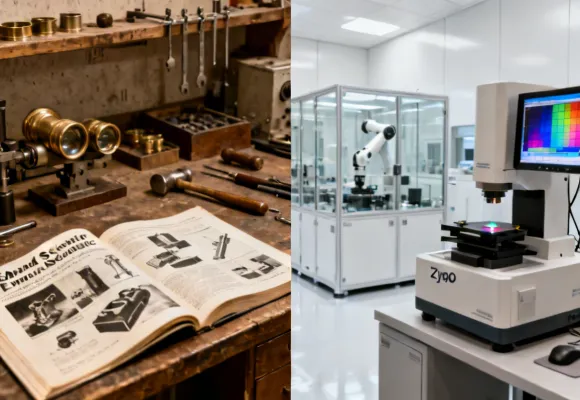
Edmund Optics heritage from 1942 to present precision optical manufacturing

84 Years of Optical Engineering

Edmund Optics was founded in 1942 by Norman Edmund in Barrington, New Jersey. The original business supplied surplus optical components to scientists, educators, and experimenters through a printed catalog that became a fixture on laboratory benches across North America. The company transitioned from surplus distribution to in-house optical manufacturing in the late 1970s, investing in precision grinding, polishing, and coating equipment.

In 2001, the company rebranded from Edmund Scientific to Edmund Optics to reflect its evolution into a full-service optical component manufacturer and distributor. Today, Edmund Optics operates manufacturing facilities on three continents, stocks over 30,000 catalog products, and employs 200+ engineers spanning optical design, coating development, manufacturing engineering, and application support. The company serves 100,000+ customers across research, industrial, defense, and life science sectors in 100+ countries.
Key Milestones

1942

Founded in Barrington, NJ

Norman Edmund established Edmund Scientific, selling surplus optical components to researchers and educators through a printed catalog.

1965

Comprehensive Optical Catalog

Published the first technical optical components catalog with measured specifications and application guidance, reaching laboratories and universities nationwide.

1979

In-House Manufacturing

Invested in precision grinding, polishing, and thin-film coating capabilities, transitioning from a distributor model to a manufacturer-distributor hybrid.

2001

Rebranded as Edmund Optics

Name change from Edmund Scientific to Edmund Optics reflected the company's evolution into engineered optical solutions for industrial and defense applications.

2012

Global Manufacturing Expansion

Opened manufacturing and distribution centers in Asia, achieving global 24-hour shipping coverage and local application engineering support across three continents.

2020

Advanced Aspheric Production

Expanded precision molded aspheric lens production capacity and launched online optical design tools and lens selection calculators for engineer self-service.

Manufacturing Capabilities

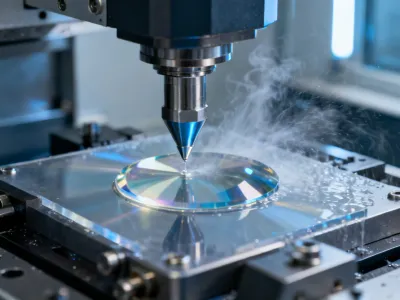
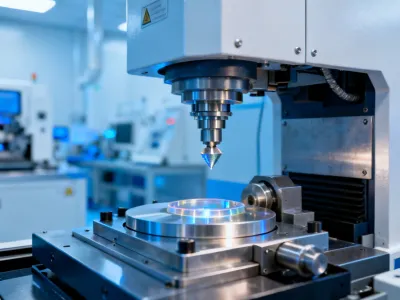
Precision lens grinding and polishing manufacturing

Precision Grinding & Polishing

CNC and conventional optical fabrication of spherical, aspheric, and cylindrical surfaces. Materials include N-BK7, UV fused silica, germanium, zinc selenide, calcium fluoride, and specialty infrared glasses. Surface figure accuracy to lambda/20. Surface roughness below 1nm RMS on polished flats.

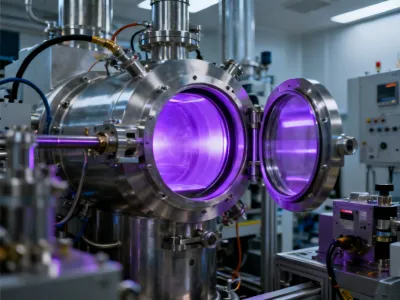
Edmund Optics thin-film optical coating deposition system

Thin-Film Coatings

In-house electron-beam, ion-assisted, and magnetron sputtering deposition systems. Anti-reflection coatings from 200nm UV to 15um LWIR. Bandpass, longpass, shortpass, dichroic, and high-reflector coatings. Hard-coated designs for durability in field environments. Witness sample spectrophotometer verification on every run.

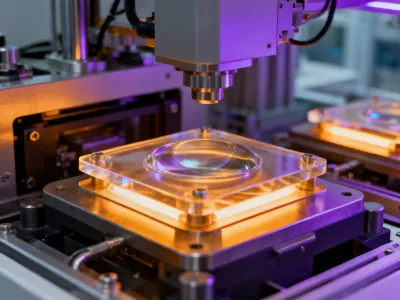
Precision molded aspheric lens manufacturing

Precision Glass Molding

High-volume production of molded glass aspheric lenses from 1.5mm to 25mm diameter. Diffraction-limited performance at production volumes. Cost-effective alternative to diamond turning for OEM applications requiring thousands to millions of units per year. Tooling design and validation included.

Diamond turning of infrared aspheric optical elements

Diamond Turning

Single-point diamond turning for infrared aspheric and diffractive optics. Substrates include germanium, zinc selenide, silicon, aluminum, copper, and electroless nickel. Surface roughness below 5nm RMS. Produces aspheric, toroidal, and diffractive surface profiles directly from CAD geometry.

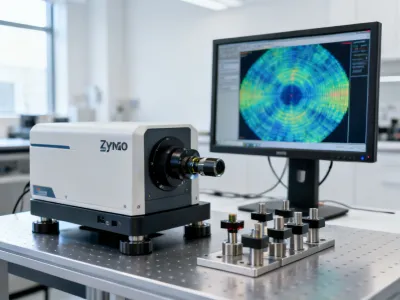
Edmund Optics optical metrology laboratory with Zygo interferometer

Metrology Services

15,000 sq ft metrology center with Zygo GPI-XP interferometers, Bruker white-light profilers, Satisloh centering systems, Cary and PerkinElmer spectrophotometers, and MTF test benches. All instruments calibrated against NIST-traceable reference standards. Contract metrology services available for customer-supplied optics.

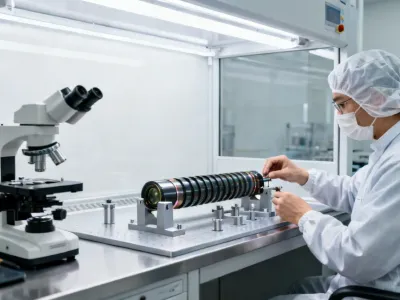
Edmund Optics precision optical assembly clean room

Assembly & Integration

Multi-element lens assembly, bonded optic fabrication, and integrated imaging module production in Class 7 and Class 8 clean room environments. Precision alignment using active MTF feedback and centration measurement. From single prototype units through production volumes with documented inspection data.

Quality Management & Certifications

Edmund Optics maintains ISO 9001:2015 certification across all manufacturing facilities, audited annually by an accredited third-party registrar. Environmental management follows ISO 14001:2015 standards. Defense and aerospace optical production operates under ITAR registration with the U.S. State Department DDTC.

Optical manufacturing conforms to MIL-PRF-13830B surface quality standards where specified by the customer or product design. Incoming raw material inspection, statistical process control during production, and 100% final inspection of precision assemblies maintain the below-0.3% reject rate documented in our quality metrics.

ISO 9001:2015 Quality Management
ISO 14001:2015 Environmental
ITAR Registered Defense Trade
MIL-PRF-13830B Surface Quality
Edmund Optics ISO 9001 and ISO 14001 quality certifications

Aspheric Fabrication: Selecting the Right Manufacturing Method

Different aspheric manufacturing technologies serve different design requirements. The table below presents objective trade-offs based on our production data across three fabrication methods. No single method is optimal for all applications.

Parameter Precision Glass Molding Diamond Turning (SPDT) CNC Polishing (MRF/IBF)
Surface Irregularity lambda/10 at 632.8nm lambda/4 to lambda/2 (visible); lambda/10 at 10.6um lambda/20 or better at 632.8nm
Surface Roughness (RMS) < 2nm 3-8nm (periodic tool marks present) < 0.5nm
Diameter Range 1.5mm - 25mm 5mm - 300mm+ 10mm - 500mm+
Material Compatibility Limited to moldable glasses (D-ZK3, L-BAL35, C0550) IR crystals, metals, Ge, ZnSe, Si, Al, Cu, NiP Most optical glasses and crystals
Wavelength Suitability Visible and NIR (scatter-free) MWIR and LWIR preferred; visible limited by scatter UV through LWIR
Volume Economics Lowest cost above 500 units (tooling $5K-$15K) Prototypes to low volume (<100 units); no tooling required Low to medium volume; highest per-unit cost
Typical Lead Time 8-12 weeks (including tooling); 2-4 weeks for repeat orders 2-6 weeks 4-10 weeks
Key Limitation Limited glass selection; max ~25mm diameter; tooling cost barrier at low volume Periodic tool marks cause scatter at visible wavelengths; not suitable for UV Highest per-unit cost; slower cycle time; economically impractical above 1,000 units/year

Engineering note: For visible-wavelength OEM applications above 500 units/year, precision glass molding typically delivers the best combination of optical quality and unit economics. For infrared or prototype requirements, diamond turning eliminates tooling cost and supports exotic substrates. CNC polishing (magnetorheological or ion beam finishing) is reserved for ultra-precision requirements where surface figure below lambda/20 is mandatory, such as astronomical or lithographic optics. Our application engineers routinely help customers select the fabrication method that matches their performance, volume, and budget constraints.

Global Manufacturing & Support

Four manufacturing sites on three continents. Regional application engineering centers. Same-day shipping from stocked inventory in New Jersey, Europe, and Asia.

1,100+ Employees
200+ Engineers
30,000+ sqm Facilities
100+ Countries

Evaluate Our Capabilities for Your Next Project

Submit your optical design requirements and our manufacturing engineers will provide a detailed feasibility assessment and quotation.

Request a Manufacturing Consultation