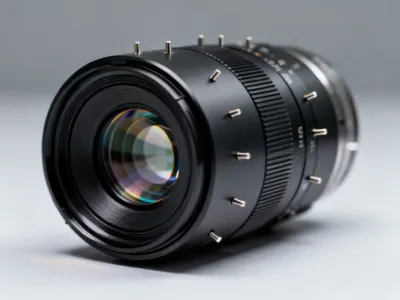
Edmund Optics: Precision Optical Components Engineered for Performance

From aspheric lenses specified to lambda/10 surface irregularity to machine vision cameras calibrated for sub-pixel accuracy, Edmund Optics delivers optical components and imaging systems to 100,000+ engineers and researchers across 100 countries. ISO 9001-certified manufacturing. ITAR-registered. 84 years of optical engineering heritage since 1942.
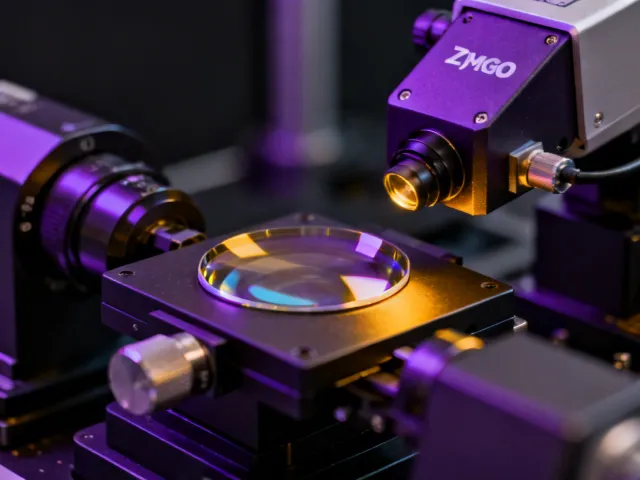
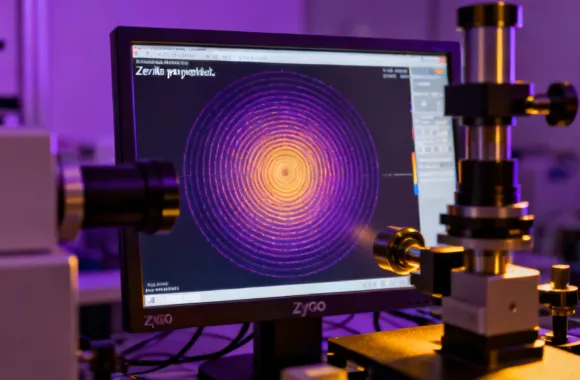
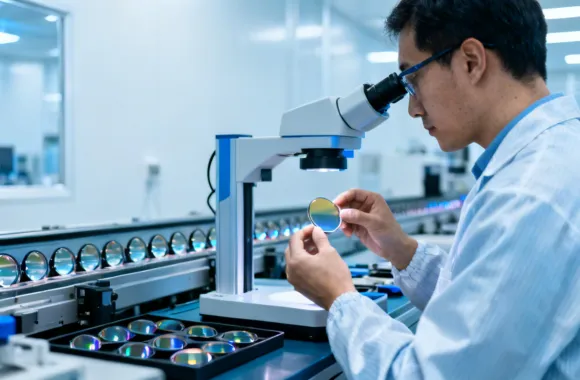
Edmund Optics precision optical metrology laboratory with interferometric measurement
84 Years in Optics
100K+ Active Customers
30,000+ Stocked Products
100+ Countries Served

Why Engineers Specify Edmund Optics

Three capabilities that distinguish our optical components from catalog alternatives: measured surface quality, ISO-certified manufacturing, and application engineering depth.

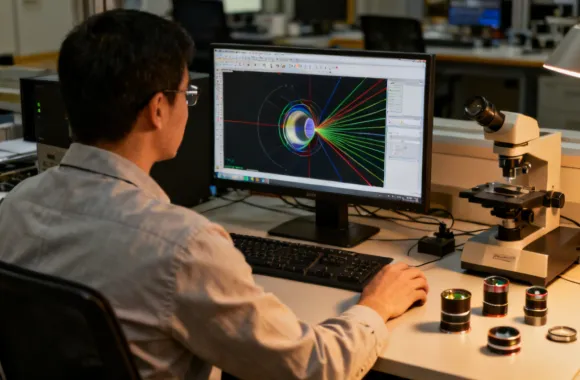
Edmund Optics interferometric wavefront measurement of aspheric lens

Diffraction-Limited Optical Performance

Our precision aspheric lenses achieve surface irregularity specifications below lambda/10 at 632.8nm HeNe reference, with surface roughness measured by white light interferometry at sub-nanometer RMS values. The 87-114 molded glass aspheric lens series maintains focal length tolerance within +/-1% across production lots verified by Zygo interferometric measurement. Rhomboid prisms hold angular accuracy to 3 arc-minutes, confirmed by autocollimator testing during incoming QC. These are measured values from our metrology lab using NIST-traceable reference standards, not design-software estimates.

< λ/10 Surface Irregularity at 632.8nm
Edmund Optics ISO 9001 certified optical quality inspection

ISO-Certified Optical Manufacturing

Every Edmund Optics manufacturing facility operates under ISO 9001:2015 quality management, with optical production lines conforming to MIL-PRF-13830B surface quality standards where applicable. Our Barrington metrology center houses Zygo GPI-XP interferometers, Satisloh centering measurement systems, and Bruker white-light profilers. Each production lot undergoes incoming material verification, in-process dimensional checks, and final optical performance testing. The reject rate on precision assemblies runs below 0.3% -- a figure auditable by procurement teams.

< 0.3% Production Reject Rate
Edmund Optics application engineering team providing technical consultation

Eight Decades of Optical Engineering Heritage

Edmund Optics traces its lineage to 1942. Our application engineering team includes 50+ degreed optical engineers handling over 30,000 technical inquiries per year -- questions about lens selection for specific conjugate ratios, filter specification for multi-band fluorescence imaging, prism geometry for beam displacement calculations, and camera-lens matching for machine vision resolution requirements. The technical content library includes 300+ application notes and optical design calculators developed from actual customer project experience.

50+ Degreed Optical Engineers on Staff

Precision Optical Product Categories

Aspheric lenses, imaging lenses, optical filters, prisms, machine vision cameras, and photodetectors. 30,000+ products stocked for same-day shipping. Custom specifications available.

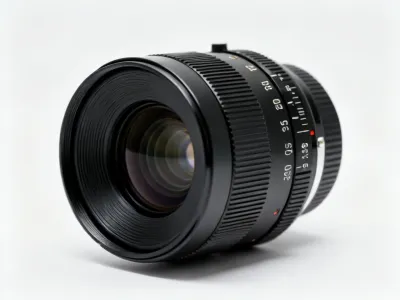
Edmund Optics machine vision imaging lenses

Imaging Lenses

Fixed focal length, zoom, and telecentric lenses for machine vision, inspection, and scientific imaging. C-mount, F-mount, and custom thread options.

View Details →
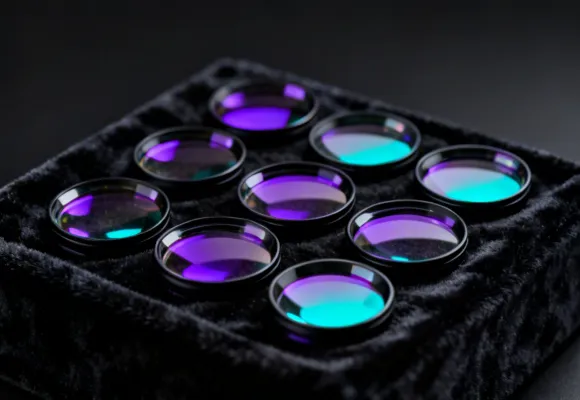
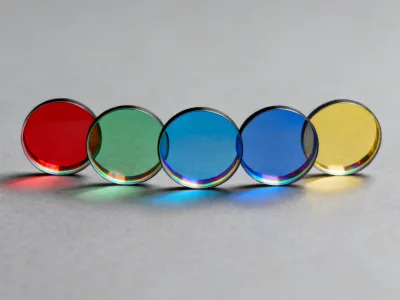
Edmund Optics optical bandpass and interference filters

Optical Filters

Bandpass, longpass, shortpass, neutral density, and notch filters. Hard-coated thin-film designs from 200nm UV to 15um LWIR. OD4+ blocking specifications.

View Details →
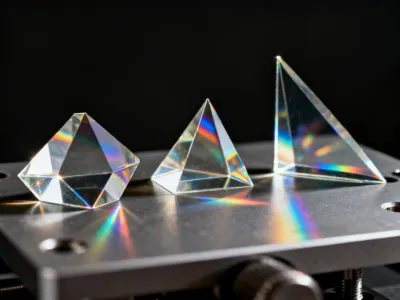
Edmund Optics precision optical prisms

Prisms & Mirrors

Rhomboid, right-angle, penta, dove, and retroreflector prisms. N-BK7 and UV fused silica substrates. Angular accuracy to 3 arc-minutes. Protected and enhanced coatings.

View Details →
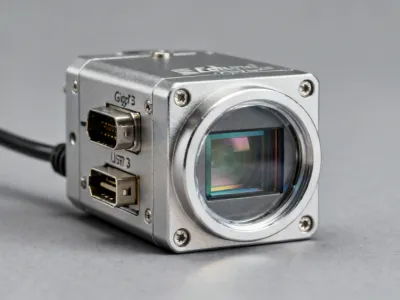
Edmund Optics machine vision cameras

Machine Vision Cameras

Area scan and line scan cameras with Sony, FLIR, and Allied Vision sensors. GigE, USB3, and CoaXPress interfaces. Paired with Edmund Optics imaging lenses for integrated solutions.

View Details →
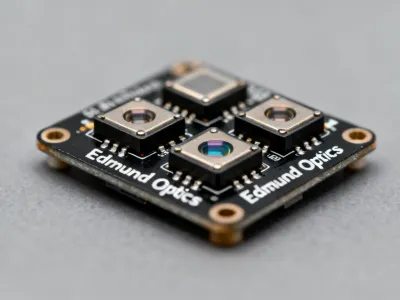
Edmund Optics photodetectors and sensors

Photodetectors & Sensors

Quadrant photodiodes, silicon and InGaAs photodetectors, and optical power meters. Calibrated responsivity from UV to SWIR. Suitable for beam alignment and optical metrology.

View Details →
Edmund Optics custom optical assemblies

Custom Assemblies

Multi-element lens assemblies, beam expanders, and integrated imaging modules built to your specifications. From prototype through production volumes with documented inspection reports.

View Details →

Industries We Serve

Precision optics for machine vision, life sciences, defense, semiconductor, and research applications.

What Our Customers Report

"Our lab specifies Edmund Optics filters for every fluorescence microscopy setup we build. The hard-coated bandpass filters show less than 0.1% out-of-band leakage at OD6 blocking, which matters when we are imaging single-molecule FRET events. Their spectral data sheets include measured transmission curves, not just the design target. We have ordered 800+ filters across four years without requesting a return."

Prof. Yuki Tanaka, Ph.D. Director of Biophotonics Lab, Stanford University

"We integrate Edmund Optics 33-163 and 68-576 cameras into our agricultural sorting machines. The cameras run 16 hours per day in a grain dust environment. After 14 months, zero sensor failures across 28 deployed units. Their technical support team helped us match the 59870 16mm imaging lens to our specific working distance and field-of-view requirements before we committed to the purchase. That upfront engineering saved us from ordering samples of six different lenses."

James Thornton CTO, AgriVision Systems, Des Moines, IA

Frequently Asked Questions

Products & Specifications

Our precision molded aspheric lenses are specified to surface irregularity below lambda/10 at 632.8nm (HeNe), measured by Zygo interferometry. Surface roughness is below 2nm RMS, verified by Bruker white-light profilometry. Centering accuracy is within 3 arc-minutes. These specifications apply to production lots, not just best-case samples. Actual test data is available on request for critical applications. Cosmetic quality conforms to MIL-PRF-13830B 40-20 scratch-dig standard or tighter depending on the specific catalog item.

Yes. Every optical filter product page includes a measured spectral curve showing transmission percentage versus wavelength. These curves are measured on production witness samples using a Cary or PerkinElmer spectrophotometer, not simulated from the coating design recipe. For OEM volume orders, we provide lot-specific certificates of conformance with the measured center wavelength, FWHM bandwidth, peak transmission, and blocking OD values for your incoming inspection records.

Our standard N-BK7 rhomboid prisms (including the 49-419 15mm model) hold angular accuracy to 3 arc-minutes per face. Right-angle prisms like the 32-332 are specified at 3 arc-minutes on the 90-degree angle and 5 arc-minutes on the hypotenuse. Tighter angular tolerances down to 1 arc-minute are available through our custom manufacturing program at additional cost and lead time. Surface quality is 40-20 scratch-dig standard.

Ordering & Support

Yes. Our application engineering team includes 50+ degreed optical engineers who handle over 30,000 technical inquiries annually. If you provide your system parameters (wavelength range, working distance, field of view, resolution requirement, sensor format), our engineers can recommend specific catalog components or propose a custom solution. For complex projects, we offer Zemax simulation and prototype development services. There is no charge for standard technical consultations.

Over 30,000 catalog products are stocked in regional warehouses (New Jersey, Europe, Asia) and ship same day for orders placed before 2:00 PM local time. Custom optics lead times vary by complexity: simple modifications to existing designs (custom coatings, specific focal lengths) typically ship in 2-4 weeks. Ground-up custom designs with new tooling require 6-12 weeks. We provide firm lead time estimates during the quotation process.

Yes. OEM pricing is available for recurring orders above defined quantity thresholds, which vary by product category. Contact our sales engineering team with your estimated annual volume and delivery schedule for a formal quotation. We support blanket purchase orders with scheduled releases, VMI (vendor-managed inventory) arrangements for high-volume accounts, and consignment stock programs for strategic OEM partners.

Edmund Optics is ITAR-registered with the U.S. State Department Directorate of Defense Trade Controls (DDTC). We manufacture and supply optical components for defense and aerospace programs under appropriate export control classifications. Our compliance team can advise on ECCN classifications and licensing requirements for specific product orders. Controlled technical data and ITAR-restricted items are handled through documented procedures conforming to ITAR regulatory requirements.

Technology Trade-Offs & Limitations

This is one of the most common design trade-offs in aspheric lens selection, and the answer depends on your volume, material, and surface quality requirements. Precision glass molding produces aspheric lenses at low per-unit cost for volumes above approximately 500 units, with surface irregularity to lambda/10 and roughness below 2nm RMS. However, molding is limited to glass types compatible with the molding process (certain low-Tg glasses like D-ZK3 and L-BAL35), maximum diameters around 25mm, and requires upfront tooling investment of $5,000-$15,000 that only pays off at volume. Diamond turning handles a wider range of materials including germanium, ZnSe, silicon, and metals, supports larger diameters, and requires no tooling — but per-unit cost is significantly higher, surface roughness is typically 3-8nm RMS (worse than molded), and scatter from diamond-turning marks can be problematic for visible-wavelength applications. For infrared applications above 2um wavelength, diamond turning is usually the better choice. For high-volume visible-wavelength OEM applications, molding wins on unit economics. Neither technology is universally superior.

Our manufacturing is optimized for established optical glasses (N-BK7, UV fused silica, N-SF series), infrared crystalline materials (germanium, ZnSe, CaF2, silicon), and certain specialty glasses (chalcogenides, GASIR). We do not currently manufacture optics from ceramic YAG, sapphire (Al2O3), or diamond substrates — these require specialized fabrication equipment that we do not operate in-house. Fluoride crystals like BaF2 and LiF are handled with limitations: their hygroscopic nature restricts coating adhesion and environmental durability, and we advise customers that these materials degrade in humid environments above 60% RH unless properly sealed in a housing. Plastic optics (polycarbonate, PMMA, cyclo-olefin polymers) are outside our manufacturing scope; we recommend dedicated injection-molding suppliers for polymer lens requirements. Being transparent about these boundaries helps engineers avoid specifying materials that will not meet their reliability requirements.

Hard-coated (ion-assisted or sputtered) interference filters are more durable than traditional soft-coated filters, but they are not indestructible. Operating temperature limits are typically -50C to +80C; above 80C, differential thermal expansion between the coating stack and substrate can cause coating delamination or spectral drift of 0.01-0.03 nm/C. Angular sensitivity is inherent to thin-film interference: a bandpass filter designed for normal incidence (0 degrees) will shift its center wavelength toward shorter wavelengths by approximately 0.5-1.5nm at 10 degrees angle of incidence, depending on design. This matters in fast optical systems (low f-number) where cone half-angles exceed 5 degrees. Laser damage threshold varies by coating design: our narrowband filters are typically rated for CW power densities up to 500 W/cm2 but are not suitable for pulsed laser applications above 1 J/cm2 at nanosecond pulse widths. For high-power pulsed laser applications, purpose-designed laser-grade optics with higher LIDT specifications should be specified instead.

Speak with an Optical Engineer

Whether you need to select components for a new imaging system, specify custom coatings for a laser application, or source volume optics for an OEM platform, our application engineering team provides the technical depth to resolve your requirements.

  • Component selection and system design consultation
  • Zemax simulation and prototype development
  • OEM volume pricing and blanket order programs
  • 30,000+ products stocked for same-day shipping
Please enter your first name.
Please enter your last name.
Please enter a valid email address.
Please describe your requirements so our engineers can assist.
You must agree before submitting.
Our application engineering team typically responds within one business day.